
SELF-DIRECTED CONCEPT
Spark
A dating app redefining success by shifting the question from “Who should I match with?” to “How do I make better decisions in dating?”
A dating app redefining success by shifting the question from “Who should I match with?” to “How do I make better decisions in dating?”
ROLE
Product thinking, UX, visual design
Product thinking, UX, visual design
TYPE
Self-directed concept
Self-directed concept
SCOPE
Exploratory research, behavioral loop, full UI system
Exploratory research, behavioral loop, full UI system
YEAR
2026
2026

I used Figma AI, ChatGPT and Claude to conduct exploratory research, build the product structure, screen order, and early layouts for Spark. I kept the strongest parts of the flow, then rebuilt and styled the final system myself, including the visual direction, typography, color, imagery, logo, and icons. AI helped me get from idea to a working app concept in about a week.
I also used Midjourney to explore the Spark logo animation, then cleaned up the timing and motion manually in Premiere Pro.
I used Figma AI, ChatGPT and Claude to conduct exploratory research, build the product structure, screen order, and early layouts for Spark. I kept the strongest parts of the flow, then rebuilt and styled the final system myself, including the visual direction, typography, color, imagery, logo, and icons. AI helped me get from idea to a working app concept in about a week.
I also used Midjourney to explore the Spark logo animation, then cleaned up the timing and motion manually in Premiere Pro.
THE PROBLEM
Dating apps prioritize engagement over meaningful connection, leading to endless matches, repeated patterns, and user burnout. I’ve been a user of these apps and I’ve spent five years designing them. The dopamine hit is instant, the connection rarely is.
Dating apps prioritize engagement over meaningful connection, leading to endless matches, repeated patterns, and user burnout. I’ve been a user of these apps and I’ve spent five years designing them. The dopamine hit is instant, the connection rarely is.
78%
78%
78%
of dating app users report emotional burnout
of dating app users report emotional burnout
1.4M
1.4M
1.4M
UK users left dating apps in
2023–24
UK users left dating apps in
2023–24
“I have over 40 matches but it feels like no one wants to actually get to know me.”
“I have over 40 matches but it feels like no one wants to actually get to know me.”
DATING APP USER, INFORMAL CONVERSATION, AGE 26–34
THE IDEA
Spark introduces a simple loop: understand how someone approaches dating, require a reflection after every date, translate those reflections into patterns, and feed the patterns back as guidance.
Spark introduces a simple loop: understand how someone approaches dating, require a reflection after every date, translate those reflections into patterns, and feed the patterns back as guidance.
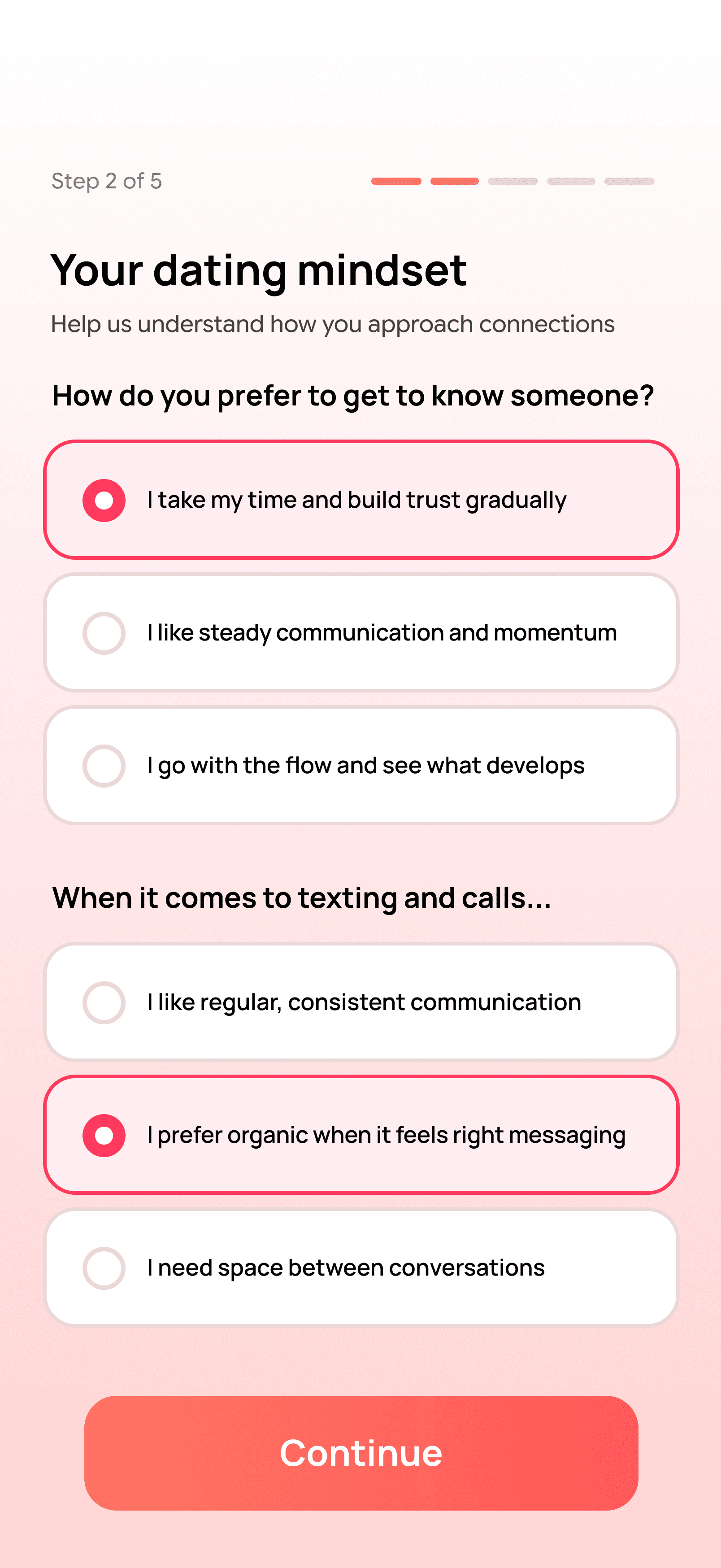
01 · UNDERSTAND
ONBOARDING SCREEN
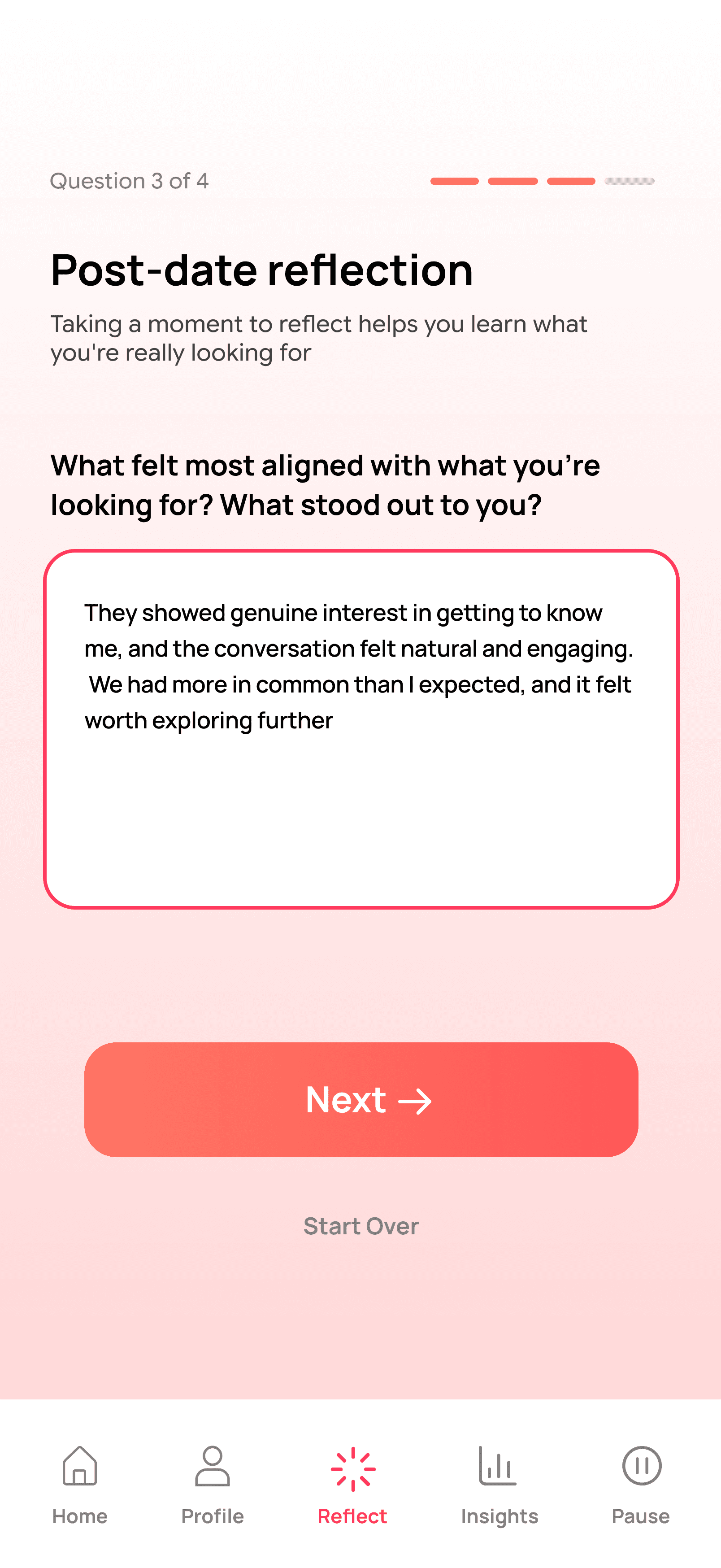
02 · CAPTURE
REFLECTION SCREEN

03 · TRANSLATE
INSIGHTS SCREEN

04 · LEARN & GROW
CONSENT SCREEN
01 · UNDERSTAND
ONBOARDING SCREEN
02 · CAPTURE
REFLECTION SCREEN
03 · TRANSLATE
INSIGHTS SCREEN

04 · LEARN & GROW
CONSENT SCREEN
THE CORE BET
Spark’s core bet isn’t that insights change behavior, because awareness rarely does. It’s that friction changes behavior, and insights make the friction feel earned.
Spark’s core bet isn’t that insights change behavior, because awareness rarely does. It’s that friction changes behavior, and insights make the friction feel earned.

Mandatory reflection slows the swipe loop. The insights are what make the slowdown feel worth it.
Mandatory reflection slows the swipe loop. The insights are what make the slowdown feel worth it.
DECISIONS & TRADEOFFS
DECISION 01
Required Reflection, Not Optional
CHOSE
Require three post-date reflections before unlocking insights.
COST
Raises the bar for using the app and may increase early churn. That’s intentional. The friction self-selects for users who want a more deliberate experience.
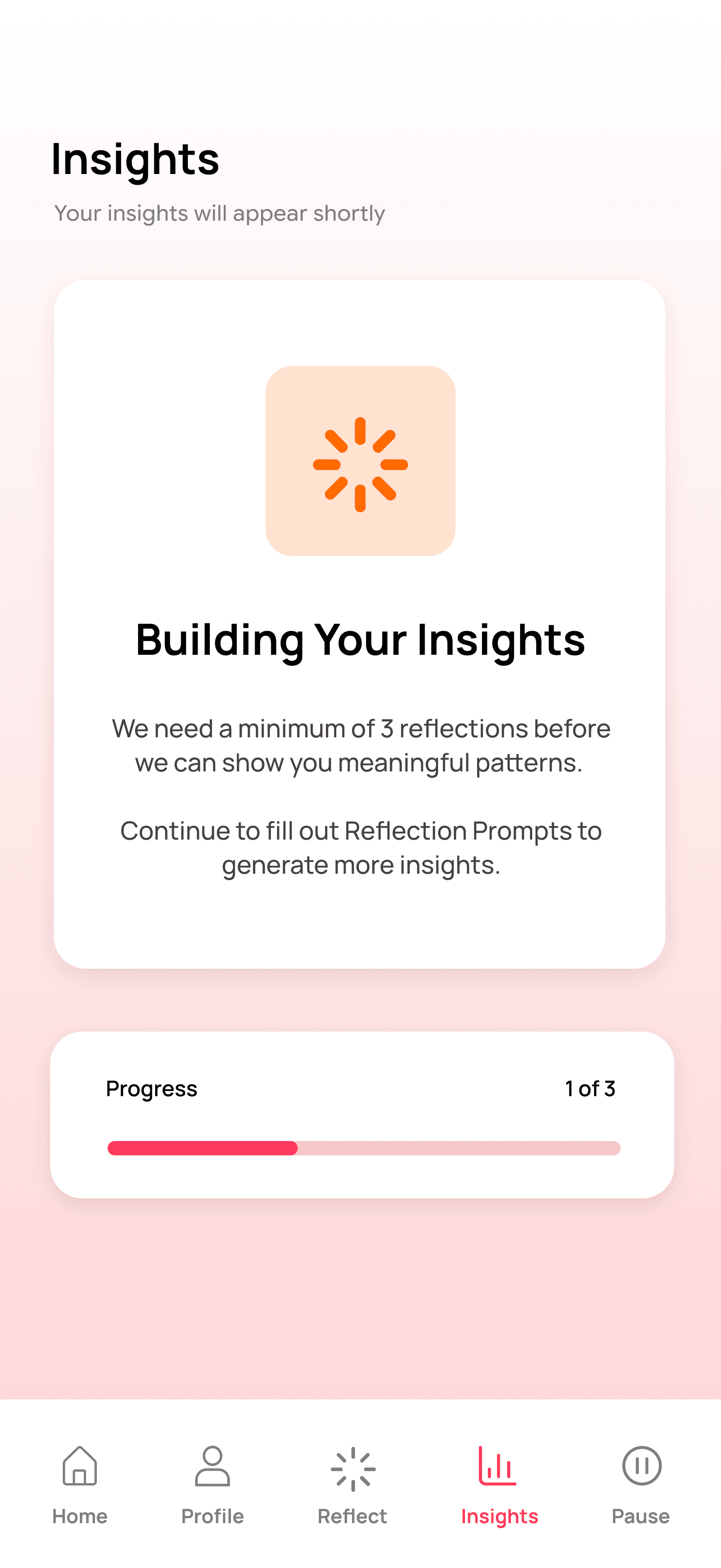
01 · MINIMUM OF 3 REFLECTIONS
01 · MINIMUM OF 3 REFLECTIONS

02 · WEEK TO WEEK GROWTH
02 · WEEK TO WEEK GROWTH

03 · PERSONALIZED REPORT
03 · PERSONALIZED REPORT

04 · GENTLE SYNTHESIZED ADVICE
04 · GENTLE SYNTHESIZED ADVICE
01 · MINIMUM OF 3 REFLECTIONS MUST BE COMPLETED
02 · TRACK PROGRESS OVER WEEK TO WEEK GROWTH
03 · PERSONALIZED FEEDBACK REPORT
04 · GENTLE SYNTHESIZED ADVICE
DECISION 02
Pacing Over Volume: The Mindful Pause
CHOSE
Show ten quality profiles a day, then direct people to their matches or insights. Once a week, they can also choose a Mindful Pause for a longer break.
COST
Less time swiping and fewer profiles viewed. The tradeoff is a slower experience that gives people more time to think before moving on.

01 · 10 QUALITY PROFILES SHOWN PER DAY BASED ON MATCH %

02 · MINDFUL PAUSE PROMPTED AFTER 10 VIEWS CAPPED AT ONCE PER WEEK
01 · 10 QUALITY PROFILES SHOWN PER DAY BASED ON MATCH %
02 · MINDFUL PAUSE PROMPTED AFTER 10 VIEWS CAPPED AT ONCE PER WEEK
WHAT I’D VALIDATE FIRST
Will people actually complete required reflections?
Spark's core thesis depends on people actively participating in the reflection. I’d test optional versus mandatory versions first, then track 30/60/90-day retention to see whether the added friction is worth it.
Will people actually complete required reflections?
Spark's core thesis depends on people actively participating in the reflection. I’d test optional versus mandatory versions first, then track 30/60/90-day retention to see whether the added friction is worth it.
THE METRIC NOBODY TRACKS
72%
of daters told Hinge they wanted a second date
72%
of daters told Hinge they wanted a second date
Wanting one gets measured. Getting one doesn’t. Spark’s north star is Quality Match Rate: the percentage of first dates that lead to a second date and a positive post-date reflection. I’d start with a 40% target and use the first cohort to see whether that bar is realistic.
Wanting one gets measured. Getting one doesn’t. Spark’s north star is Quality Match Rate: the percentage of first dates that lead to a second date and a positive post-date reflection. I’d start with a 40% target and use the first cohort to see whether that bar is realistic.
Product design is about what you say no to. Spark’s thesis is built on rejecting the metrics the rest of the industry chases.
Product design is about what you say no to. Spark’s thesis is built on rejecting the metrics the rest of the industry chases.
Product design is about what you say no to. Spark’s thesis is built on rejecting the metrics the rest of the industry chases.
Connecting brand storytelling with product thinking.
© 2026 Grace Jonas
Connecting brand storytelling with product thinking.
© 2026 Grace Jonas
Connecting brand storytelling with product thinking.
© 2026 Grace Jonas